
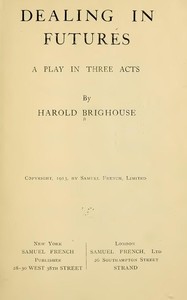
Dealing in Futures: A Play in Three Acts by Harold Brighouse
First published in 1910, Harold Brighouse's play is a snapshot of a family at a turning point. We meet the Chadwicks in their comfortable Manchester home. Father John is a self-made man who believes firmly in the power of money and social position. His son, Dick, is engaged to the wealthy but shallow Muriel Pilling. It's a match John fully endorses—a smart business move for the family's future.
The Story
The trouble starts with Dick's sister, Janet. She's sharp, principled, and disgusted by the whole arrangement. She sees her brother sacrificing any chance of real happiness for a life of dull comfort. As the wedding plans move forward, the tension in the house becomes unbearable. Janet confronts her father, arguing that they are all 'dealing in futures'—trading Dick's potential for a safe bet. A series of explosive revelations and a desperate, last-minute plan by Janet force everyone to look at their choices, their values, and what they truly owe each other. The final act is a masterclass in dramatic tension, leaving you wondering right until the last moment which future this family will choose.
Why You Should Read It
What grabbed me about this play is how modern the arguments feel. Brighouse doesn't paint anyone as a pure villain. John Chadwick genuinely believes he's doing the best for his son. Dick is caught between duty and desire. And Janet, the play's fiery conscience, is utterly compelling. You're on her side, but you also understand the terrifying weight of the family's expectations. The dialogue is witty and quick, full of the kind of barbed comments that only family members can throw at each other. It's a brilliant, compact exploration of how money and love get tangled up, and whether one can ever truly buy security for someone you care about.
Final Verdict
Perfect for fans of classic drama who don't want stuffy language, or for anyone who's ever argued with their family about 'what's best.' If you enjoy the sharp social observations of writers like George Bernard Shaw or the tense, intimate family dynamics of a play like 'A Doll's House,' you'll find a lot to love here. It's a short, powerful read that proves some conflicts—between generations, between pragmatism and passion—are truly timeless.
Barbara Jackson
1 year agoMy professor recommended this, and I see why.
David Taylor
3 months agoCitation worthy content.
Matthew Jones
10 months agoBased on the summary, I decided to read it and it creates a vivid world that you simply do not want to leave. I will read more from this author.









Christopher Robinson
2 weeks agoClear and concise.